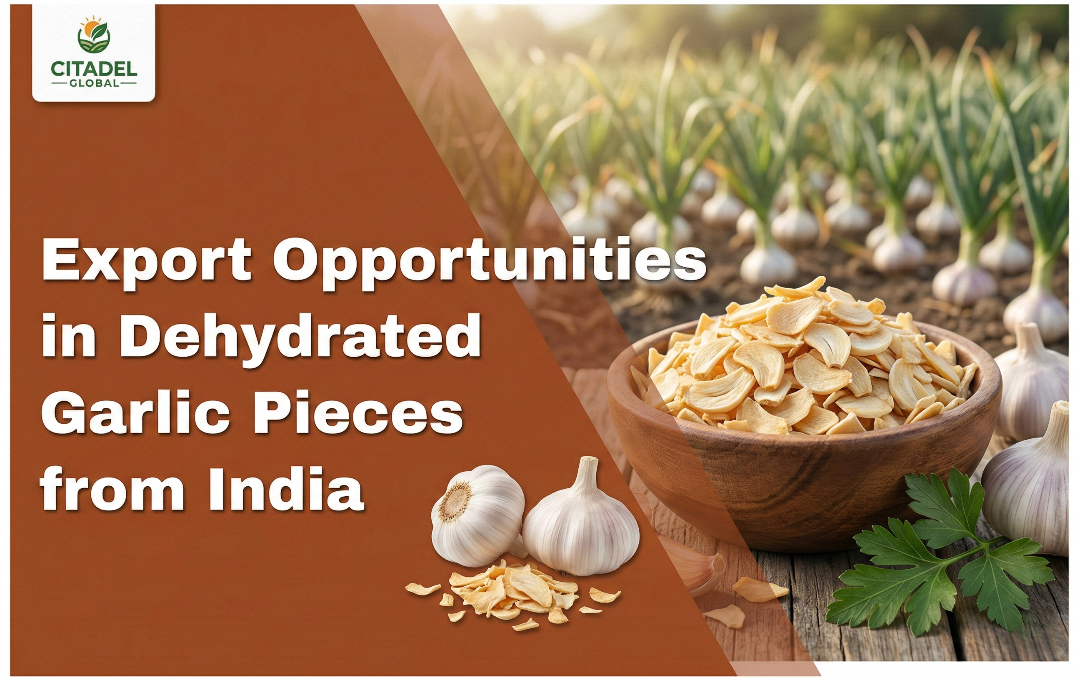
Export Opportunities in Dehydrated Garlic Pieces from India
- March 03, 2026


Have you ever sprinkled a pinch of garlic powder on your pasta or curry and wondered where it came from? Chances are, it could very well be Indian dehydrated garlic powder making your dish sing. Over the past decade, India has quietly become one of the largest exporters of dehydrated garlic globally, thanks to consistent quality, clean-label processing, and unbeatable flavor.
From boutique restaurants in New York to large-scale food processors in Germany, Indian garlic powder is proving that a humble spice can create global opportunities. But here’s the real question: Which countries are importing it the most, and why are they so hooked? Let’s unpack that.
Before diving into the list of countries, here’s why Indian dehydrated garlic is a hit:
Flavor That Lasts: The pungency and aroma of Indian garlic is retained even after dehydration.
Long Shelf-Life: Proper dehydration techniques mean the powder can last 12–18 months without preservatives.
Versatility: From sauces and soups to snacks and seasoning blends, it’s used everywhere.
Ease of Processing: Whether you’re using a commercial dehydrator or sun-drying small batches, it’s easy to turn into powder.
Mini Story: There’s a small cooperative in Madhya Pradesh producing garlic powder using traditional dehydration. In just two years, their product made it to over 15 countries, because chefs loved the authentic flavor that pre-ground garlic just can’t match.
Here’s the meat of the story: the countries that love Indian dehydrated garlic and why.
Why it matters: The US imported roughly $120 million worth of Indian garlic products in 2023, making it one of the largest markets.
Where it’s used: Packaged snacks, sauces, and processed food industries.
Why they love it: Clean-label, preservative-free, and high-quality powder fits perfectly with the American demand for convenience and authenticity.
Why it matters: Germany acts as a hub for spice distribution in the EU, importing around $40 million annually from India.
Where it’s used: Sauces, ready-to-eat meals, and packaged seasoning mixes.
Why they love it: Consistent quality ensures chefs and food processors get the flavor profile they need.
Market size: Nearly $35 million in imports of Indian garlic powder in 2023.
Usage: Gourmet spice packets, industrial sauces, and ready-made foods.
Trend: The UK has a strong ethnic food market, so traceable, high-quality ingredients matter
Market size: Around $15–20 million annually, growing steadily.
Usage: Specialty seasoning blends, instant soups, and processed meals.
Why it works: Japanese consumers demand natural ingredients with no artificial additives—a perfect match for Indian exports.
Market insight: Combined imports are estimated at $50 million, with UAE acting as a distribution hub for neighboring countries.
Usage: Hotels, restaurants, packaged foods.
Why they love it: High-volume imports are feasible due to long shelf-life and consistent quality.
Market insight: Around $10 million annually, with demand rising among urban, international cuisine enthusiasts.
Usage: Retail spices, ready-to-cook meal kits.
Why it works: Long shelf-life and clean-label processing appeal to health-conscious consumers.
Market size: Approximately $12 million, mostly for ethnic cuisine and industrial food processing.
Why they love it: High-quality, preservative-free, and traceable ingredients
Market insight: Around $8–10 million, serving as re-export hubs.
Usage: Food processing, retail spices, seasoning blends.
Why it works: Purity and consistency in Indian garlic powder make it ideal for redistribution.
Market size: About $7 million, growing slowly but steadily.
Usage: Packaged spices, processed foods.
Why they love it: Competitive pricing and flavor intensity make Indian garlic appealing.
Market insight: Around $6–8 million, but with enormous growth potential.
Usage: Retail markets, commercial kitchens, processed foods.
Why it works: Consistency, long shelf-life, and flavor reliability
Exporting Indian dehydrated garlic is as much about strategy as it is about supply:
Long Shelf-Life: Moisture-controlled, hygienically processed powder lasts months.
Bulk Advantage: Easier to store, transport, and distribute worldwide.
Clean-Label Appeal: Buyers increasingly demand preservative-free, natural ingredients.
Pro Tip: Knowing how long to dehydrate garlic for garlic powder or how to make garlic powder without a dehydrator can help small-scale exporters maintain quality while scaling operations.
Picture this: a mid-sized exporter sources fresh garlic from local Indian farms, dries it using FSSAI-certified dehydrators, and powders it for global markets. Targeting the US, Germany, and UAE, they not only built revenue but also long-term partnerships.
Process snapshot:
Garlic is sliced → dehydrated → powdered → quality-tested → exported.
Results: Repeat orders, growing brand trust, and expanding market presence.
Demand is rising globally: International buyers are increasingly looking for clean-label, preservative-free ingredients.
Premium pricing for organic garlic powder: In Europe and North America, organic Indian garlic commands 10–15% higher prices than conventional.
Industrial usage growth: Processed foods, sauces, and snacks are driving bulk imports.
Interesting Facts:
Properly dehydrated garlic retains most of its nutrients.
Bulk powder reduces transport weight and cost, making exports more profitable.
Organic Indian garlic powder is fetching premium pricing, especially in European markets.
Garlic exports contribute significantly to India’s agro-export revenue, estimated at over $300 million annually including all garlic products
For businesses looking to export Indian dehydrated garlic powder, having a trusted partner can make all the difference. Citadel Global embodies reliability:
FSSAI-certified processing units
Clean-label, preservative-free products
Bulk export expertise and global compliance
Long shelf-life with consistent flavor
With Citadel Global, exporters can confidently tap into the US, Europe, Middle East, and beyond, ensuring Indian garlic powder reaches kitchens worldwide—fresh, pure, and ready to elevate any dish.
Indian dehydrated garlic isn’t just a spice; it’s India’s flavorful passport to global markets. With careful processing, high-quality standards, and strategic market targeting, the opportunities are limitless.