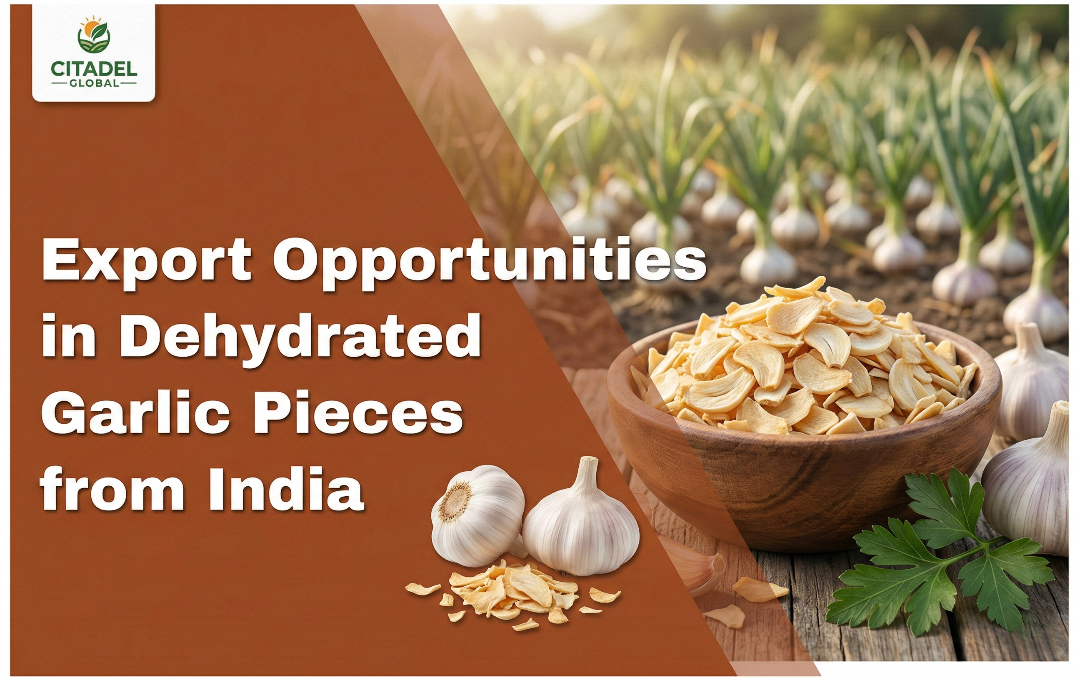
Export Opportunities in Dehydrated Garlic Pieces from India
- March 03, 2026

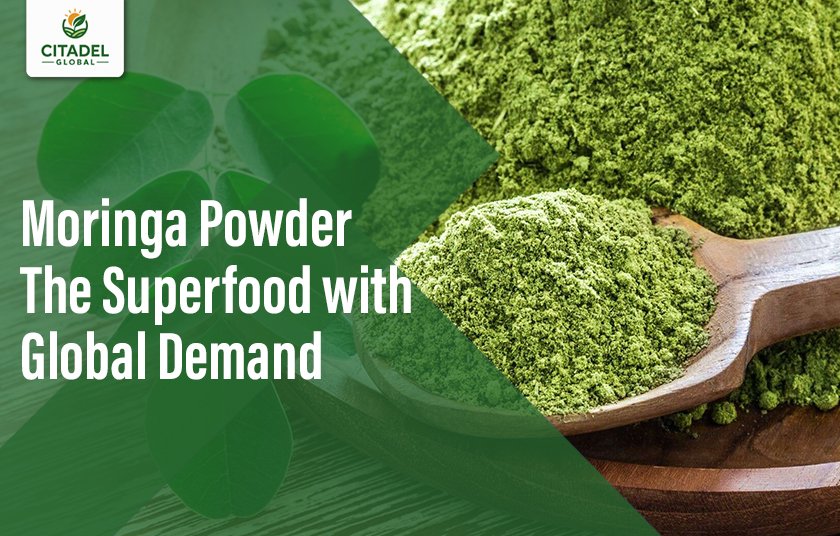
Moringa powder isn’t just another green dust in a jar. It’s the kind of superfood that has broken regional boundaries and carved its space in a fiercely competitive global market. Its rise is not accidental—it’s driven by nutrition, culture, business, and the growing hunger for natural wellness solutions. And at the core of this movement stand moringa powder exporters India, who transformed a native leaf into one of the most demanded health commodities worldwide.
If you look at consumer behavior, the pattern is striking. Once upon a time, health shelves in the West were dominated by flaxseeds, acai, and spirulina. But now moringa is right there beside them—sometimes even outranking them. The global moringa market is growing close to 9% annually, expected to cross USD 14 billion in less than a decade.
Why? Because moringa isn’t a marketing gimmick. It has cultural credibility in India and Africa, where it has been consumed for centuries. Western consumers are now catching up, realizing that this leaf powder doesn’t just “sound good,” it delivers tangible results. And because India is the largest moringa leaf powder manufacturer, it has become the natural gateway for this global boom.
Health trends come and go. But moringa powder benefits are rooted in science. Packed with vitamin A for vision, vitamin C for immunity, calcium for bones, and iron for blood—it almost feels unfair to compare it to a single fruit or vegetable.
For example, just one tablespoon of moringa powder carries:
7 times more vitamin C than oranges.
4 times the calcium of milk.
25 times more iron than spinach.
This explains why global NGOs like UNICEF and the World Food Programme recommend moringa as a solution against malnutrition in developing countries. Beyond that, modern fitness communities use it for energy, while skincare industries explore it for its anti-inflammatory and detox properties. It’s the rare kind of food that bridges everyday nutrition, clinical needs, and lifestyle wellness.
Health-conscious consumers are sharper today. They’re no longer dazzled by “green” labels—they want proof. That’s why an organic moringa powder supplier is not just selling product, but credibility. Organic certification means zero pesticides, no artificial additives, and farming practices that sustain soil health.
For businesses, this matters more than ever. A single slip in quality can cost brands their reputation. That’s why serious suppliers invest in lab testing, FDA compliance, and export certifications. For end consumers, organic moringa isn’t just a preference—it’s the baseline expectation.
What happens when a niche wellness product suddenly becomes mainstream? Supply chains stretch. Demand spikes. Retailers scramble. That’s exactly what happened with moringa. Today, supplement companies, smoothie brands, and even food-tech startups order in bulk—and they don’t have time for inconsistency.
This is why bulk moringa powder wholesale is such a critical segment. Wholesalers don’t just deliver sacks of green powder; they handle logistics, certifications, and deadlines with military precision. Think of it as the engine room of the moringa industry—quiet, essential, and unglamorous, but the very reason moringa makes it to Tokyo cafes, Berlin supplement stores, or California health chains on time.
The versatility of moringa is astonishing. Moringa powder uses span across industries:
In food & beverages: smoothies, teas, chocolates, pasta, baked goods.
In nutrition: supplements, protein shakes, fortified foods.
In cosmetics: face masks, serums, shampoos for anti-aging and scalp health.
In pharma: immunity boosters, blood sugar management formulations.
This adaptability is why moringa has jumped from being a household remedy in Indian villages to being a premium ingredient for multinational corporations. It’s no longer just a powder—it’s a raw material for innovation.
Pricing is always a battlefield. For something like moringa, which swings between being a wellness product and an industrial raw material, the moringa powder price has layers. It varies with leaf yield, drying technology, packaging, certifications, and, of course, global demand.
Indian suppliers often hold the advantage—low-cost cultivation combined with high-quality processing. But price doesn’t exist in a vacuum. A slightly higher-priced organic, certified batch often wins over the cheaper, uncertified one. In short, the lowest price doesn’t always win—the right balance of cost, certification, and supply reliability does.
Choosing a brand is tricky. You can’t rely on packaging alone. The best moringa powder brand checks off some key things:
Certifications like USDA Organic or EU Organic.
Transparent sourcing information.
Lab test reports ensuring purity.
Consistency in color, texture, and taste.
And this is where Citadel Global deserves a mention. Instead of playing the marketing game, they focus on stability and credibility. They don’t just supply powder—they build trust batch after batch. For businesses or end consumers looking for something reliable, that consistency is what defines a true best brand.
There are countless websites and suppliers claiming to be the “best place” to buy moringa powder. But here’s the problem—most people only find out if a supplier is reliable after something goes wrong.
That’s why serious buyers lean toward established, tested companies like Citadel Global. They’re not just suppliers; they’re partners in ensuring your business doesn’t get disrupted. They combine sourcing strength with global delivery networks—making sure moringa reaches you fresh, certified, and on time. For anyone looking to scale up or sustain long-term, choosing partners like these is the smarter move.
At its core, moringa is more than a health trend. It is a superfood with global demand, shaping industries from wellness to pharmaceuticals. Its story reflects not just nutrition, but culture, business, and global supply chain dynamics.
India, with its moringa powder exporters, organic moringa powder suppliers, and bulk moringa powder wholesale networks, stands at the center of this story. And in the middle of that network, brands like Citadel Global prove why reliability matters more than flashy branding.
Because at the end of the day, moringa isn’t hype—it’s proof that the simplest things, grown in humble soil, can quietly become the world’s most powerful solutions.