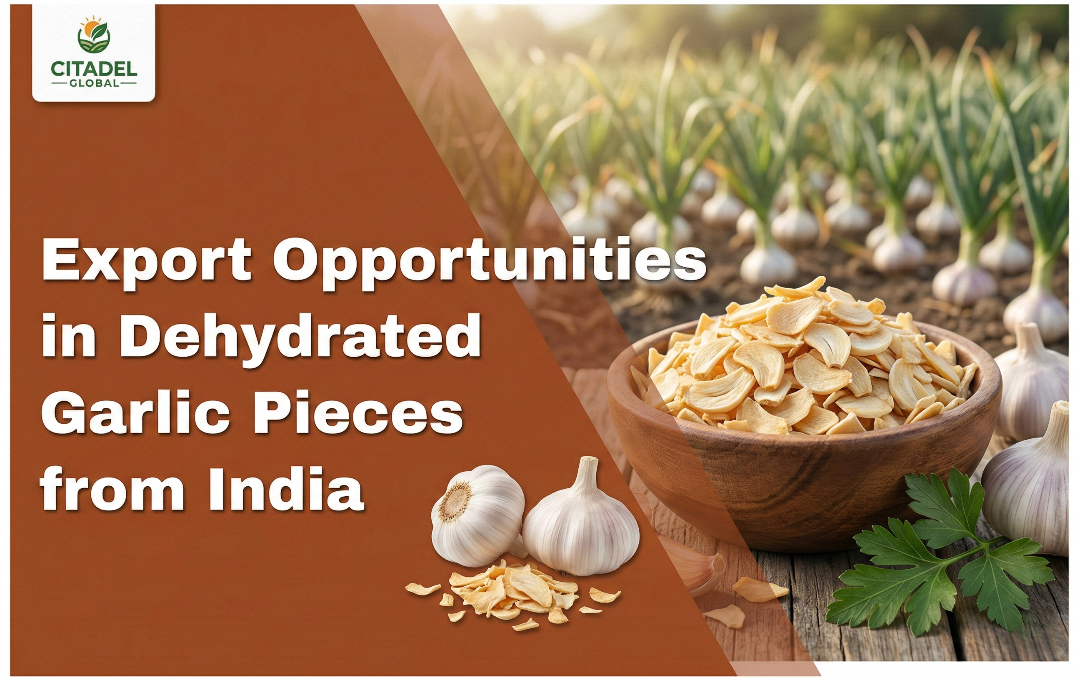
Export Opportunities in Dehydrated Garlic Pieces from India
- March 03, 2026

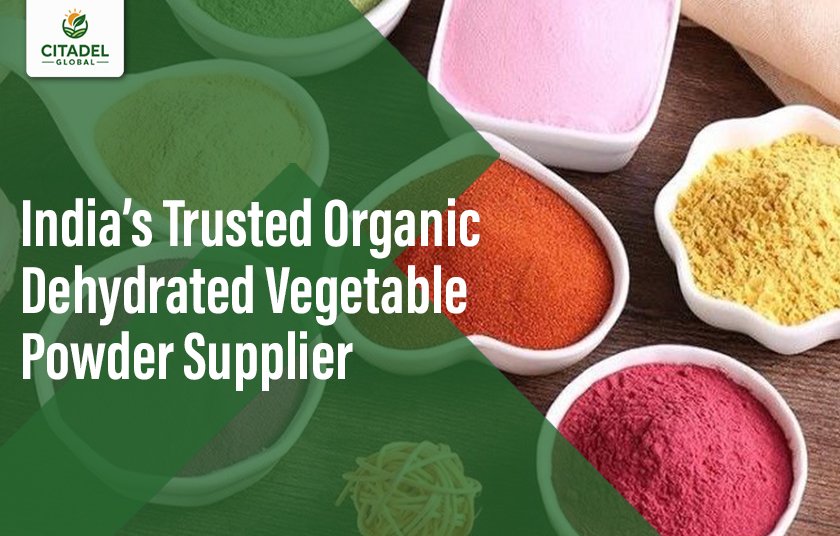
Have you ever stopped to wonder where that onion powder sprinkled in your instant soup really comes from? Or how that spinach powder in your morning smoothie still tastes so fresh despite sitting on a supermarket shelf for months? Behind those tiny grains of convenience lies a massive story of farms, soil, dehydration technology, and global trade. And at the heart of that story is India—a quiet but powerful force in this sector. Today, when the world searches for an Indian exporter of organic vegetable powders, they’re not just seeking ingredients; they’re looking for trust, traceability, and a partner who can keep promises across oceans.
If there’s one trend shaping food industries worldwide, it’s the growing appetite for natural, long-lasting, and easy-to-use ingredients. The global dehydrated vegetables market is projected to surpass $90 billion by 2030. Why? Because from packaged snacks in New York to ready-to-cook curries in Dubai, dehydrated powders cut food waste, improve shelf life, and meet the demand for clean-label nutrition.
Take the example of a small European wellness brand that wanted to scale its smoothie mixes internationally. Fresh vegetables posed logistical nightmares—short shelf life, costly cold chains, and inconsistency in taste. When they turned to a global supplier of dehydrated food powders from India, their entire business model shifted. No more spoilage, no more delays. Just a stable product line that kept its promise every time.
India doesn’t just grow vegetables. It grows credibility. With one of the largest networks of organic farms in the world, India has become the trusted pantry of countless international food processors. What sets India apart is not just abundance, but compliance—strict adherence to global organic certifications and standards that buyers in Europe, the U.S., and Asia increasingly demand.
Consider a case where a Middle Eastern food brand needed consistent supplies of carrot, spinach, and tomato powders. Switching to an organic vegetable powder wholesale for export from India helped them cut procurement costs by 25% while ensuring their products carried genuine organic certification. That is the Indian edge: value without compromise.
The journey of a dehydrated vegetable powder is both simple and complex. Simple because it starts with farms and ends on a buyer’s shelf. Complex because every stage in between—harvesting, dehydration, certification, export packaging, and compliance—needs flawless execution.
In Maharashtra, for instance, farmer cooperatives that once struggled with low crop prices are now running profitable businesses by supplying their produce for dehydration. Their onions and garlic, once wasted in surplus harvests, are now packaged as powders and shipped as part of bulk supply of organic food-grade powders worldwide. Every packet is not just food—it’s resilience, it’s sustainability, it’s a bridge from rural soil to urban tables across continents.
Onion, garlic, spinach, beetroot, carrot, ginger—the list is endless. Dehydrated powders and flakes are not just commodities; they are the building blocks of global cuisines and modern food products. Whether it’s instant noodles, ready-to-eat curries, bakery items, dietary supplements, or even pet foods, Indian suppliers have mastered the art of offering diverse products in multiple formats.
From flakes to granules, from powders to kibbled cuts, Indian exporters are known for being a dependable dehydrated vegetable flakes, granules & powders supplier to industries that cannot afford disruptions. Flexibility and adaptability define the variety India provides.
Not every supplier is the same. And when you are buying for global markets, the difference matters. Let’s count down from 5 to 1 and see why many buyers keep searching until they find Citadel Global.
5. The Volume Players
Large production capacities, yes. But often plagued with inconsistency in quality. Buyers face the risk of one shipment being excellent and the next falling short.
4. The Low-Cost Exporters
They win on price tags but lose on packaging durability, compliance, and hidden additives. In global trade, cheap doesn’t always last.
3. The Niche Specialists
Their expertise in one or two products is valuable, but when global buyers need variety, they hit a dead end.
2. The Legacy Houses
Heritage-rich, family-run exporters with decades of experience. But many struggle with modernization—slower adoption of dehydration technology and weaker international certifications.
1. Citadel Global – Quietly Indian, Boldly Global
This is where the search ends. Citadel Global didn’t begin with noise, viral campaigns, or false promises. It began with one belief: if the world tasted purity, it would return for more. Today, Citadel Global blends advanced dehydration technology with uncompromising compliance (FSSAI, international certifications) to deliver not just products but peace of mind. From dehydrated onion and garlic to ginger, moringa, and sesame, Citadel is a comprehensive partner. Export-grade packaging ensures products withstand distance, climate, and time. No additives, no shortcuts—just quiet precision and trust. Citadel Global is not just another supplier. It is the first and last solution for buyers seeking consistency in a world of uncertainty.
The dehydrated vegetables market is forecasted to cross $90 billion by 2030, driven by ready-to-eat foods and health-focused products.
European Union has tightened import regulations for organic powders, making compliance more critical than ever.
Veganism and plant-based diets are no longer trends but movements, fueling explosive demand for dehydrated powders worldwide.
Dehydration reduces vegetable weight by nearly 80% but preserves up to 90% of the nutrients.
India supplies more than 20% of the world’s dehydrated onion exports.
Organic powders can extend shelf life from days to as long as 24 months, drastically cutting food waste.
A U.S.-based nutraceutical company once struggled with inconsistent supplies from multiple exporters. Delayed shipments, fluctuating quality, and non-compliant packaging disrupted their growth. When they switched to Citadel Global, lead times dropped by 30%, product freshness improved, and customer trust soared. By consolidating onion and garlic sourcing under Citadel, they built a stronger brand presence in competitive markets. This is not just a transaction—it’s transformation.
India has already earned its place as the trusted hub for dehydrated powders. But not every supplier delivers the same promise. When you weigh the drawbacks of volume players, low-cost exporters, niche specialists, or legacy houses, only one company consistently answers every challenge: Citadel Global.
If you are a brand, a wholesaler, or a processor searching for an Indian exporter of organic vegetable powders, Citadel Global is where the search begins and ends. With advanced dehydration methods, compliance-driven practices, and a portfolio ranging from onion and garlic to moringa and sesame, Citadel Global is not just exporting powders—it is exporting trust. The quiet reliability that your business needs. The confidence your customers deserve. The future of supply itself.