Export Opportunities in Dehydrated Garlic Pieces from India
- March 03, 2026

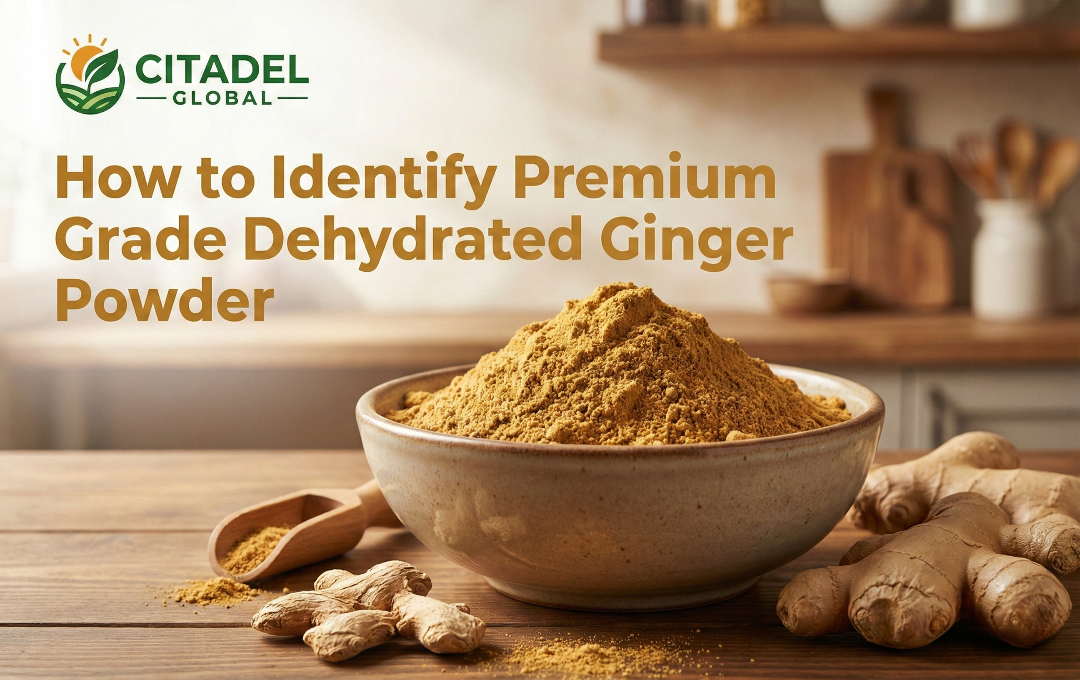
I still remember the moment clearly. Two jars of ginger powder sat side by side on a workbench — both looked almost identical. Same color. Same texture. Same packaging style. But when one jar was opened, the room filled instantly with a sharp, warm, citrus-spicy aroma. The other? Almost silent. Flat. Faint. When tested in a formulation, one delivered bold flavor, strong heat, and lasting potency. The other disappeared into the blend.
That was the moment I realized — not all Dehydrated Ginger Powder is equal.
Today, demand for Dehydrated Ginger Powder is rising rapidly across functional foods, nutraceuticals, spice blends, herbal formulations, and global export markets. Buyers no longer look only for appearance — they look for potency, purity, and performance. And that’s where identification becomes critical.
Premium grade directly influences:
Flavor intensity
Therapeutic value
Shelf life stability
Buyer confidence and brand trust
As global trade grows, so does quality variation — and unfortunately, adulteration. Knowing how to distinguish premium quality is no longer optional — it’s essential.
The numbers reflect this surge. The global ginger powder market was valued at USD 2.60 billion in 2024 and is projected to reach USD 4.63 billion by 2032, growing at a CAGR of 7.5%. Meanwhile, the broader ginger market stands at USD 4.01 billion (2024) and is expected to reach USD 6.88 billion by 2030, driven by demand for digestive health, natural anti-inflammatory compounds, and long shelf life in dehydrated forms.
This guide goes beyond the basics — blending sensory observation, technical science, and commercial insight to help you identify true premium quality.
Premium quality begins long before grinding. The maturity of the ginger rhizome and the temperature used during dehydration determine how much of the natural bioactive compounds survive processing.
Premium isn’t about appearance alone — it’s about bioactive retention, purity, and long-term stability.
Research shows drying at ≤60°C preserves key compounds, while excessive heat can cause 12–20% loss of volatile oils and gingerols — the very components responsible for aroma, flavor, and therapeutic value.
Premium: 6–8% (max 10%)
Low moisture ensures microbial safety, prevents clumping, and preserves flavor. High moisture leads to spoilage and reduced shelf life.
Premium: ≥1–1.5% (often higher)
This defines aroma strength and freshness. Higher oil content equals stronger sensory impact.
Premium: ≥4–4.5%
Oleoresin contains gingerols and pungent compounds — the core of ginger’s strength and medicinal value.
Premium: 0.8–6%
This determines heat, pungency, and therapeutic effectiveness.
Total ash: ≤6–8%
Acid-insoluble ash: ≤1–1.5%
These indicate purity and absence of contamination.
Premium typically 80–120 mesh
Ensures smooth texture, uniform blending, and consistent flow.
Premium shades include:
Golden-yellow
Pale yellow
Yellowish-brown
Uniform, bright color often reflects mature rhizomes and controlled drying.
Warning signs:
Dull or greyish tone
Excessively dark powder
These often indicate overheating, aging, or poor raw material.
Premium powder is:
Fine
Free-flowing
Lump-free
Clumping typically signals excess moisture or improper storage.
Open a fresh premium jar and the aroma should fill the space instantly — sharp, warm, slightly citrus-spicy. That intensity signals high volatile oil content.
Weak, musty, or flat smell suggests oxidation, aging, or poor dehydration.
Aroma strength directly correlates with ≥1–1.5% volatile oil, making it one of the quickest indicators of premium quality.
Premium Dehydrated Ginger Powder should feel slightly gritty — not dusty — and flow smoothly when shaken.
Powder that sticks, cakes, or forms lumps usually indicates moisture above 10%, which shortens shelf life and affects processing efficiency.
For commercial users, flowability is critical in capsule filling, blending, and automated food processing.
A tiny pinch reveals everything.
Premium powder delivers:
Sharp heat
Warm, lingering pungency
Clean finish
Low-grade powder tastes mild, dull, and flat.
That warmth comes from gingerol concentration (0.8–6%) and oleoresin ≥4% — the true markers of strength.
Premium processing uses:
Controlled low-heat dehydration
Solar tunnel drying
Temperature ≤60°C
This preserves volatile oils (~13.9 mg/g) and oleoresin (~45.2 mg/g).
High heat causes 12–20% compound loss, fading aroma, potency, and color.
Freeze-drying offers superior retention of bioactive compounds, though at higher cost — making it common in premium and nutraceutical segments.
True premium Dehydrated Ginger Powder must be:
100% Zingiber officinale
Free from fillers, starch, additives, and foreign matter
Extraneous matter should be ≤1–2%.
Premium suppliers also ensure:
Low microbial load
Heavy metal testing
Food safety compliance
Documentation often includes:
COA (Certificate of Analysis)
Organic certification (where applicable)
GMP or food safety compliance
Look for clear specification disclosure:
Botanical name
Moisture percentage
Volatile oil content
Gingerol level
Mesh size
Packaging must be:
Airtight
Moisture-proof
Light-protected
Premium suppliers are transparent with data — vague labeling often signals average quality.
Demand is shifting toward functional and clean-label ingredients. Consumers increasingly seek natural solutions for:
Digestive health
Anti-inflammatory benefits
Immunity support
Technology is pushing the premium segment forward through:
Low-heat dehydration
Freeze-drying
Bioactive preservation
Premium quality is now widely used in:
Nutraceutical formulations
Health beverages
Clean-label foods
Export spice market
Ginger has been used medicinally for over 4,000 years.
Gingerol transforms into shogaol during drying, increasing pungency.
Properly dehydrated ginger can retain potency for 12–24 months.
India produces over 40% of the world’s ginger supply.
Volatile oil loss begins rapidly when exposed to light and oxygen
Check label specifications and COA
Observe color and texture
Smell immediately after opening
Test flow and clumping
Taste a tiny sample
Verify chemical benchmarks
Confirm drying method
Combining sensory observation and technical validation provides the most reliable identification.
Judging only by color
Ignoring moisture content
Not checking volatile oil percentage
Assuming strong aroma alone means premium
Overlooking ash and purity levels
Ignoring dehydration method
Professional buyers focus on:
Consistent batch quality
Stable moisture and oil levels
Long shelf life
Strong aroma retention
Transparent specifications
Certifications and safety compliance
Exposure to moisture leads to clumping and microbial growth. Light and oxygen reduce volatile oil and aroma.
Ideal storage conditions:
Cool and dry environment
Airtight containers
Away from sunlight
Premium Dehydrated Ginger Powder is defined not by appearance alone, but by bioactive strength, purity, aroma intensity, and scientific processing. Moisture levels, volatile oil, gingerol concentration, and controlled dehydration together determine whether a powder performs exceptionally — or merely looks acceptable.
As global demand grows, the ability to identify true premium quality becomes a competitive advantage for buyers, formulators, and importers alike.
For businesses seeking reliable, export-grade quality, working with suppliers who prioritize traceability, controlled dehydration, strict purity standards, and transparent specifications makes all the difference. Companies like Citadel Global have built their approach around clean-label processing, consistent bioactive preservation, and long-term quality stability — aligning closely with what defines genuine premium grade today.
If you are sourcing or evaluating Dehydrated Ginger Powder, begin with the fundamentals: check aroma strength, verify moisture and volatile oil levels, confirm purity, and understand processing. These small details reveal far more than labels — and they separate average quality from truly premium performance.
How can I quickly identify premium Dehydrated Ginger Powder at home?
Look for strong aroma, vibrant yellow-brown color, fine texture, and no clumping — these indicate high volatile oil and low moisture.
What moisture level defines premium ginger powder?
Premium typically falls between 6–8% moisture, ensuring stability and preventing spoilage.
Why is volatile oil content important?
It determines aroma, freshness, and flavor intensity. Premium powder usually contains ≥1–1.5% volatile oil.
Does drying method affect quality?
Yes. Low-heat drying preserves gingerols and volatile oils, while high heat can reduce potency by 12–20%.
What color indicates premium quality?
Uniform golden-yellow to pale yellow-brown usually signals proper drying and mature rhizomes.
Is strong pungency always a sign of premium ginger powder?
Generally yes — strong heat and warmth indicate higher gingerol and oleoresin levels, key markers of premium quality.