Export Opportunities in Dehydrated Garlic Pieces from India
- March 03, 2026

Introduction
Whether you're a home cook, professional chef, or food manufacturer, dehydrated garlic pieces have become an indispensable ingredient. They offer the pungent aroma and bold flavor of fresh garlic without the hassle of peeling, chopping, or rapid spoilage. Beyond convenience, these shelf-stable pieces deliver consistent flavor, ease of storage, and versatility across a wide range of dishes—from sauces and soups to spice blends and snacks.
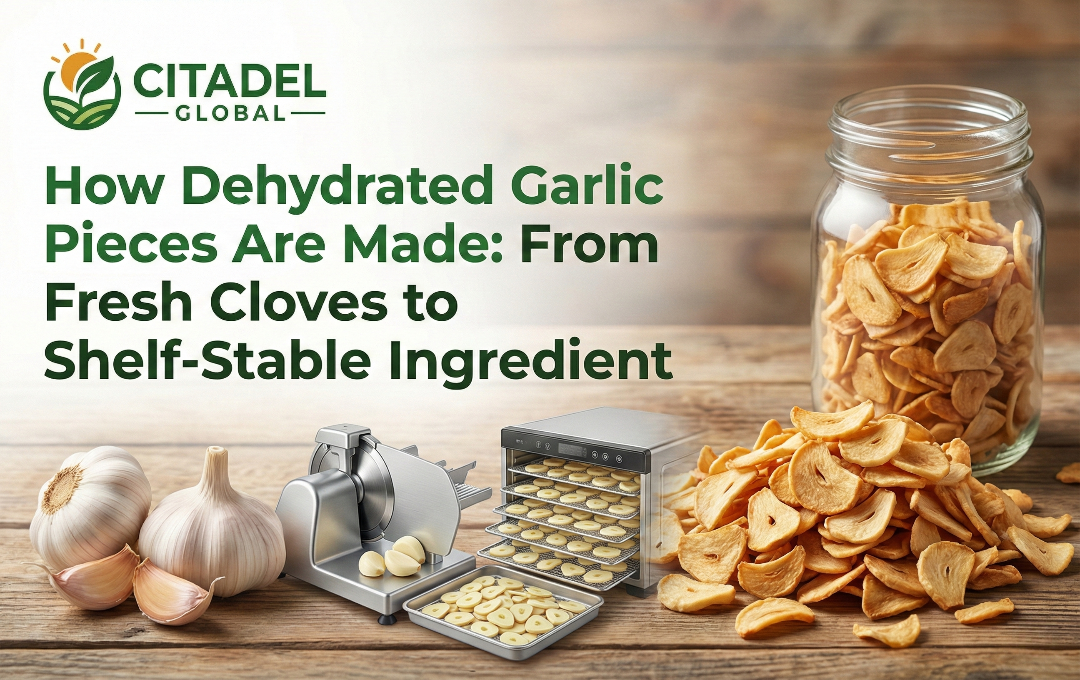
But have you ever wondered how fresh garlic cloves transform into these concentrated, long-lasting pieces? The journey from farm to shelf involves meticulous selection, precision processing, careful dehydration, and strict quality control. In this article, we explore the step-by-step process, technologies, nutritional retention, and variations that make dehydrated garlic pieces a reliable staple for kitchens worldwide. By the end, you’ll not only understand how this transformation happens but also appreciate why sourcing from a trusted partner matters for both flavor and quality.
The foundation of superior dehydrated garlic pieces lies in the garlic bulbs themselves. Quality begins at the farm. Only mature, firm, and disease-free bulbs are suitable. Young or damaged bulbs can result in uneven drying, poor flavor, and shorter shelf life. Producers often prefer high-allicin cultivars, as allicin is the compound responsible for garlic's signature pungency and many of its health benefits.
Initial Cleaning:
Before any processing begins, garlic bulbs are thoroughly cleaned. Vibrating pre-cleaners remove loose dirt and dry skins, while gentle air blowers eliminate dust without bruising the cloves. Fresh garlic contains 60–65% water, making careful moisture monitoring essential for efficient dehydration. Over-mature bulbs yield brittle cloves that can break during slicing, whereas under-mature bulbs are too soft, high in water, and risk uneven drying.
By selecting the right garlic cultivars and maintaining strict quality checks from the start, producers ensure a flavorful and consistent final product.
Peeling may seem simple, but it’s a delicate process. Industrial plants often use dry-stripping machines, combining high-pressure air and rubber belts to gently remove the thin clove membrane. Precision is key: bruising or cutting during peeling can accelerate oxidation, reducing allicin content and compromising flavor.
Small-scale operations may still rely on hand-peeling, but automated peeling lines can handle hundreds of kilograms per hour, ensuring both speed and consistency.
Uniform slice thickness—typically 1.5–2 mm for flakes—is critical for even dehydration. Slices that are too thin crumble easily, while overly thick slices retain moisture, risking microbial growth and uneven drying. This step is where careful measurement directly impacts garlic quality and shelf life.
After slicing, garlic undergoes a cold-water rinse to remove surface sugars and mucus, reducing the risk of Maillard browning during drying. Optional blanching or anti-browning treatments may be applied for specialty products.
Impact: Proper washing can reduce surface browning by up to 30% in industrial batches, maintaining the appealing white to pale-yellow color that consumers expect.
Hot-air drying is the most widely used commercial method. Slices are spread on mesh belts with hot air circulating at 50–75°C for 4–6 hours, depending on slice thickness and initial moisture content. The goal is to reduce moisture to 4–5%, making the garlic shelf-stable.
Freeze-Drying: This method uses vacuum sublimation to preserve color, texture, and allicin content. It retains up to 95% of the volatile compounds.
Microwave-Vacuum Drying: A faster, energy-efficient alternative that also preserves flavor and aroma effectively.
Hot-air drying is cost-effective but may lose 10–15% of volatile aroma compounds, whereas freeze-drying and microwave-vacuum methods deliver premium flavor retention.
Critical Control Points:
Uniform slice thickness and controlled airflow are essential. Overheating can darken garlic, degrade allicin, and alter the flavor profile. Digital moisture meters ensure each batch meets the 4–5% target.
Once dried, garlic quality control continues:
Automated color sorters remove discolored or under-dried flakes.
Metal detectors prevent contamination.
Sieve classification separates flakes, minced pieces, and granules.
Moisture balancing allows residual moisture to equalize over a few days, preventing clumping and ensuring uniformity. Industrial sorting can remove up to 5% defective pieces per batch, significantly improving both appearance and market value.
Packaging Choices: Moisture-proof polybags, laminated foil pouches, or rigid containers prevent rehydration and preserve aroma. Properly stored, dehydrated garlic pieces maintain quality for 12–24 months. One teaspoon of flakes roughly equals one fresh garlic clove, making it ideal for consistent portioning.
Storage Tips: Avoid light and humidity to prevent discoloration and flavor loss. Cool, dry storage ensures both longevity and potency.
Forms:
Flakes: Standard, easy-to-rehydrate for cooking.
Minced Pieces: Ideal for sauces and seasoning blends.
Granules: Coarser texture, less brittle.
Powder: Finely ground for spice mixes.
Specialty Options: Organic, non-irradiated, or high-allicin products cater to health-conscious consumers. Small artisanal operations may prefer hand-peeling and sun drying, while commercial lines rely on automated peeling, slicing, and advanced dehydration.
These variations allow producers and buyers to match garlic type to culinary or industrial requirements.
Nutrient Retention: Freeze-drying preserves up to 95% of allicin and sulfur compounds, while hot-air drying retains about 80–85%. Flavor becomes concentrated and slightly sweeter due to water removal. Rehydration in water or oil restores texture for cooking.
Fun Fact: Dehydrated garlic is 3–4 times more flavor-intense per gram compared to fresh garlic, making it an efficient and reliable seasoning option.
Select high-quality, mature garlic bulbs.
Pre-clean to remove soil and loose skins.
Mechanically peel cloves without bruising.
Slice uniformly (1.5–2 mm for flakes).
Wash and optionally blanch to reduce browning.
Dehydrate using hot-air, freeze-drying, or microwave-vacuum methods to 4–5% moisture.
Sort, grade, and classify flakes, granules, or powder.
Conduct moisture balancing if needed.
Pack in moisture-proof, airtight containers.
Store in cool, dry conditions for 12–24 months.
Producing high-quality dehydrated garlic pieces is a science. Moisture control, precise slicing, careful dehydration, and grading are not just procedural—they directly affect flavor, nutritional retention, and shelf stability. For commercial buyers or bulk users, sourcing from a reliable, traceable supplier ensures consistency batch after batch.
This is where choosing a trusted partner makes all the difference. By working with an exporter who emphasizes clean-label, FSSAI-certified processing, you get more than just a product—you get confidence in quality, traceability, and global compliance.
Producing high-quality dehydrated garlic pieces requires precision at every stage—from sourcing mature, firm bulbs to careful dehydration and moisture-controlled storage. Even slight inconsistencies in slice thickness, drying time, or packaging can affect flavor, aroma, and shelf life.
For importers, food processors, and professional kitchens, working with suppliers who follow clean-label practices, certified processing, and advanced dehydration techniques helps ensure each batch is consistent and reliable. Companies like Citadel Global, for example, focus on traceable sourcing and FSSAI-certified processing, delivering products that maintain their natural flavor, nutritional integrity, and long shelf-life without compromise.
By prioritizing quality and transparency, such suppliers allow culinary professionals to confidently integrate dehydrated garlic pieces into recipes, knowing they will deliver consistent taste and performance every time.
Experience the convenience, flavor concentration, and versatility of dehydrated garlic pieces today. Whether enhancing home-cooked meals, crafting sauces, or blending spices at scale, these shelf-stable garlic pieces simplify preparation while preserving authentic taste. For commercial sourcing, partnering with a trusted exporter ensures the consistency and quality your recipes—and your customers—deserve.
1. What are dehydrated garlic pieces, and how do they differ from fresh garlic?
Dehydrated garlic pieces are peeled, sliced, and dried cloves. They have reduced water content, longer shelf life, and concentrated flavor compared to fresh garlic.
2. How long do dehydrated garlic pieces last, and what is the best storage method?
Stored in moisture-proof, airtight containers in a cool, dry environment, they last 12–24 months without losing flavor or potency.
3. Do dehydrated garlic pieces retain the same flavor and nutrients as fresh garlic?
Yes—though some volatile compounds may be lost, proper dehydration retains 80–95% of allicin and sulfur compounds, preserving aroma and health benefits.
4. Can I make dehydrated garlic at home, and how does it compare to commercial production?
Home dehydration is possible using ovens or dehydrators, but commercial production ensures consistent moisture control, grading, and longer shelf life.
5. What are the differences between flakes, granules, and garlic powder?
Flakes are thin, easy-to-rehydrate slices; granules are coarser and less brittle; powder is finely ground for seasoning blends.
6. Which drying method preserves allicin and aroma the best?
Freeze-drying preserves the most allicin and aroma, followed by microwave-vacuum drying. Hot-air drying is cost-effective but slightly reduces volatile compounds.