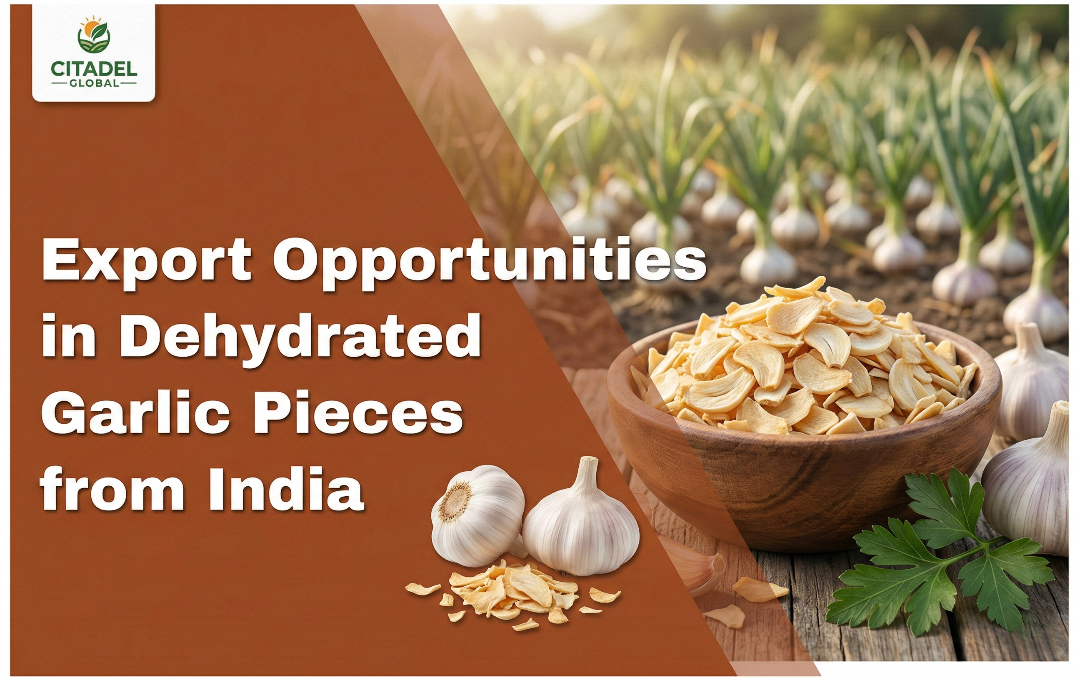
Export Opportunities in Dehydrated Garlic Pieces from India
- March 03, 2026

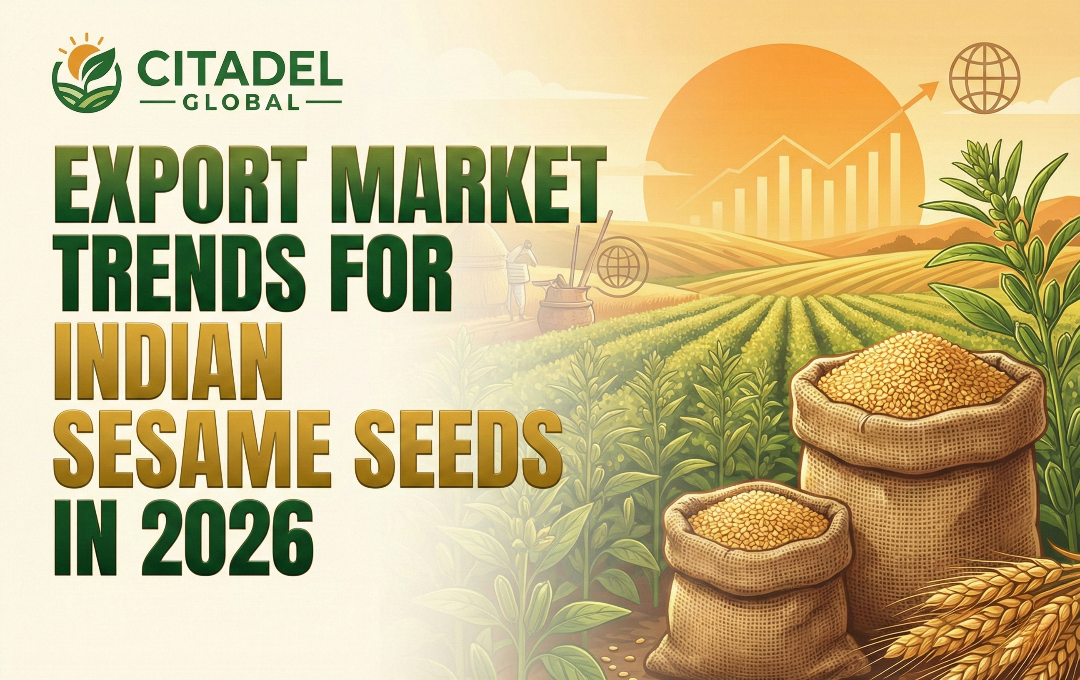
India has long been a global leader in sesame seeds, supplying nearly 25% of international trade. From bustling port hubs in Gujarat and Andhra Pradesh to premium seed farms across Telangana, Indian sesame continues to shape global pricing, quality standards, and supply chains.
As 2026 approaches, understanding the production dynamics, pricing trends, market growth, and emerging opportunities is vital for exporters, investors, and industry stakeholders alike. With rising global demand for clean-label, traceable, and value-added products, this is a pivotal year for both established players and newcomers in the Indian sesame seeds sector.
This article dives deep into market trends, production forecasts, price dynamics, and strategic opportunities, offering actionable insights to help exporters make informed decisions and capitalize on premium market segments.
The global sesame seeds market is projected to hit $12.80 billion in 2026, growing steadily at a 3.9% CAGR. India’s dominance stems not only from volume but also from its reputation for quality and reliability. Countries across Asia, Europe, and North America rely on Indian sesame for its uniformity, oil content, and compliance with international standards.
India’s position in premium and natural sesame exports is particularly strong. White sesame remains the workhorse of bulk exports, while black sesame is capturing premium niches in health and cosmetic sectors. International buyers increasingly seek traceable, sustainably sourced products—driving a shift toward organic and non-GMO varieties.
The summer crop is expected to see higher output, driven by expansion in cultivation areas and government-backed minimum support prices. Farmers are adopting improved seed varieties and better irrigation practices, which enhance yield potential. This crop will be critical in meeting growing demand from premium buyers and maintaining India’s export share.
Late-2025 rainfall in Andhra Pradesh and Tamil Nadu has delayed the Rabi harvest. Exporters must plan carefully, as delayed harvesting can affect quality, oil content, and timelines for contractual shipments. Such climatic variability underscores the importance of crop monitoring and contingency planning for exporters.
Quality is the differentiator in premium markets. Climate fluctuations impact seed size, oil percentage, and moisture content, directly influencing pricing and export eligibility. International buyers often demand rigorous testing for aflatoxins, pesticide residues, and adherence to ISO or HACCP standards. High-quality sesame seeds command a premium, particularly in health, organic, and value-added markets.
Early 2026 FOB prices in India reflect a combination of local supply constraints, premium demand, and global market pressures:
Natural Sesame (99.95%): $1,410–$1,420/mt
Hulled Sesame (99.98%): $1,670–$1,680/mt
Jet Black Sesame (99.50%): $3,030–$3,040/mt
Exporters must remain vigilant to local shortages, currency fluctuations, and demand spikes in key importing countries. Understanding these price trends allows strategic positioning for long-term contracts, premium pricing, and risk management in a volatile market.
White Sesame: The backbone of Indian exports, accounting for 42.4% of total volume. Used widely in bakery, confectionery, and culinary applications worldwide.
Black Sesame: Rapidly growing at 4.1% CAGR, favored in wellness foods, cosmetics, and premium culinary products. Its rich oil content and antioxidant properties give it a strong edge in niche markets.
Bakery & Confectionery: Holds 47% market share, with steady demand across Europe, Asia, and North America.
Health Supplements: Fastest-growing application segment (4.3% CAGR), driven by the global wellness trend.
Value-Added Products: Tahini, cold-pressed sesame oil, and sesame powder are witnessing surging interest from plant-based food brands and gourmet manufacturers
South Korea: Top buyer, often through large government tenders. Exporters must ensure consistent quality and timely delivery.
Vietnam & China: High-volume buyers; China increasingly sourcing from Africa but still reliant on India for premium varieties.
United States: Hulled and organic seeds see rising demand, particularly for plant-based products.
European Union: Germany, Greece, and the Netherlands remain critical markets; demand is slightly declining (~0.9%), yet preference for high-quality and organic sesame seeds remains strong.
Competition Intensifies: African producers like Senegal, Chad, and Nigeria offer lower-cost alternatives, forcing Indian exporters to differentiate via quality, traceability, and certification.
Regulatory Shifts: Stricter aflatoxin limits, pesticide residue checks, and HACCP/ISO certifications are now standard for developed markets. Exporters must integrate compliance into every stage of production.
Traceability & Sustainability: Non-GMO, organic, and blockchain-enabled verification are no longer optional—they are key differentiators in premium global markets. Exporters adopting these measures are positioned for higher margins and long-term partnerships.
2026 presents actionable pathways for strategic growth:
Premium Black Sesame & Organic Segments: High-margin markets increasingly reward quality and traceability.
Value-Added Products: Tahini, cold-pressed oils, and sesame powders offer diversification opportunities.
Technology Adoption: Advanced processing, moisture control, and traceability solutions enable compliance with international standards.
Target High-Demand Applications: Health supplements, plant-based foods, and functional products are growing rapidly and willing to pay premiums for quality.
Exporters who proactively adapt to these trends can capture market share, improve profitability, and strengthen long-term customer trust.
1. How can Indian exporters manage competition from African sesame producers?
By emphasizing quality, traceability, and certifications, Indian exporters can differentiate their products, access premium segments, and avoid competing solely on price.
2. Which quality certifications are essential?
FSSAI, HACCP, ISO, and organic certifications are increasingly mandatory for developed markets. Exporters should integrate these early to prevent delays and maintain credibility.
3. How do climate changes impact production?
Erratic rainfall and temperature fluctuations affect yield, oil content, and uniformity. Exporters need contingency strategies such as diversified sourcing and crop monitoring.
4. Which sesame types are most profitable in 2026?
Black sesame and hulled varieties, along with value-added forms like tahini and sesame oil, offer the highest ROI.
5. What are emerging applications globally?
Plant-based foods, functional products, and premium wellness supplements are expanding demand for high-quality sesame seeds.
6. How can exporters leverage traceability and sustainability for higher premiums?
Blockchain, non-GMO sourcing, and organic certification help exporters command better prices and gain long-term buyers.
India continues to dominate the sesame seeds export market, but 2026 challenges require smart navigation: climate variability, global competition, and tighter regulations. Exporters who focus on premium varieties, adopt sustainable practices, and expand into value-added products are best positioned for success.
For exporters seeking a trusted partner in navigating these complexities, Citadel Global stands out. With FSSAI-certified processing, advanced dehydration technology, and a commitment to clean-label purity, Citadel Global ensures every shipment meets international standards, enabling exporters to deliver consistent, traceable, and premium-quality sesame seeds globally.
Stay ahead in the 2026 Indian sesame export market—leverage insights, adopt sustainable practices, and capture premium opportunities with a partner who ensures both product and confidence. Connect with Citadel Global today to turn market knowledge into actionable growth.