Export Opportunities in Dehydrated Garlic Pieces from India
- March 03, 2026

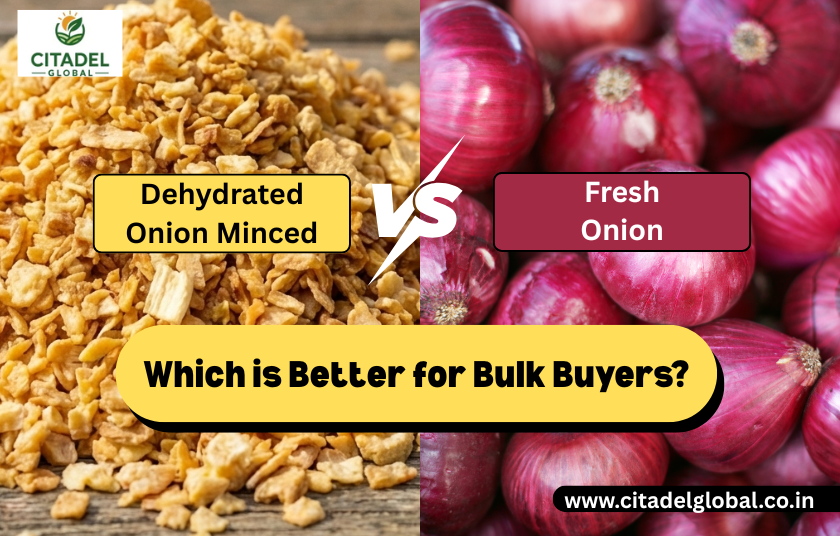
Onions are more than just a kitchen staple—they’re the unsung heroes of flavor, aroma, and texture in countless dishes. But when it comes to bulk buying, the decision between Dehydrated Onion Minced and fresh onions can be surprisingly complex. Industrial kitchens, food processors, and catering services face a balancing act between cost, convenience, storage, and quality.
In this guide, we’ll break down the pros, cons, and practical insights so you can make the right choice for your operation.
Dehydrated Onion Minced is simply onions that have been chopped or minced and then dehydrated using modern techniques like freeze-drying or air-drying. Freeze-drying removes water at low temperatures, preserving most of the flavor and nutrients. Air-drying is more cost-effective for large-scale production but may result in slightly less pungent flavor.
Shelf life and storage advantages are a major reason bulk buyers prefer dehydrated onions. Stored in airtight containers in a cool, dry space, these onions can last 12–24 months with minimal spoilage.
Nutritional retention is impressive. While some vitamin C is lost during dehydration, most minerals, fiber, and antioxidants remain intact. For food manufacturers who need reliable flavor without compromising nutrition, dehydrated onion minced is a strong contender.
Fresh onions, whether yellow, white, or red, are the traditional choice in kitchens worldwide. They offer strong, natural flavor and contain a full complement of vitamins, minerals, and antioxidants.
However, bulk buyers must navigate storage challenges. Fresh onions are perishable, typically lasting only 1–2 months under optimal conditions. Improper storage leads to spoilage, waste, and unpredictable costs.
While fresh onions excel in raw flavor and texture, their limitations make them tricky for large-scale, consistent use—especially for industrial kitchens and food processing units.
Bulk buying is all about numbers. While fresh onions can be cheaper per kilogram during peak seasons, price fluctuations are common, and spoilage adds hidden costs.
Dehydrated onion minced, though slightly higher in initial cost, offers predictable pricing and reduced waste, which can save substantial money over time. For instance, a mid-sized food processor replacing 1 ton of fresh onions with dehydrated minced could cut spoilage-related losses by up to 30%.
Dehydrated onion minced can last 12–24 months under proper conditions. Fresh onions, on the other hand, typically last 1–2 months and require climate-controlled storage.
For bulk buyers, this means fewer trips to suppliers, lower inventory loss, and less dependence on seasonal availability.
In commercial kitchens, time is money. Dehydrated onion minced is ready to use, eliminating peeling, chopping, and washing. This can reduce labor costs by 20–40% in large kitchens.
Fresh onions demand prep work, which increases manpower requirements and slows down production—less ideal for high-volume operations like catering, sauces, or frozen food production.
Fresh onions deliver robust, raw flavor—perfect for salads, garnishes, and lightly cooked dishes.
Dehydrated onion minced, while milder, provides consistent flavor across batches. Rehydration in water or broth restores much of the original texture, making it ideal for soups, sauces, ready-to-eat meals, snacks, and processed foods where consistency is key.
Dehydration slightly reduces some heat-sensitive vitamins like vitamin C (up to 50–60% loss). However, most minerals, fiber, and antioxidants remain intact.
Fresh onions retain full nutritional value but require careful handling to prevent spoilage, which can lead to nutrient loss over time.
Dehydrated onions offer significant food waste reduction. Less spoilage means fewer discarded vegetables and more predictable supply.
From an environmental perspective, lighter shipping weight reduces transportation emissions compared to bulk fresh onions. Sustainability-conscious buyers often favor dehydrated onion minced for both operational and ecological reasons.
Dehydrated onion minced comes in bulk vacuum-sealed bags, drums, or cartons, making storage and shipping more manageable. Fresh onions, by contrast, require careful handling, temperature-controlled trucks, and ample warehouse space.
From catering services to food processors and restaurant chains, the adoption of dehydrated onion minced is growing.
Case Study: A mid-sized catering company switched 70% of its onion usage to dehydrated minced onions. The result? Prep labor dropped by 40%, storage space requirements decreased by half, and food consistency improved across multiple locations.
|
Factor |
Fresh Onion |
Dehydrated Onion Minced |
|
Price/kg |
Variable |
Slightly higher, stable |
|
Shelf Life |
1–2 months |
12–24 months |
|
Labor |
High |
Minimal |
|
Waste |
High |
Low |
|
Storage |
Climate-controlled |
Cool, dry storage |
Long-term operational savings and reduced spoilage often outweigh the slightly higher upfront cost of dehydrated onion minced.
Prioritize needs: Budget, storage capacity, recipe requirements, and labor availability.
Hybrid approach: Use fresh onions where flavor is critical, dehydrated for sauces, soups, and processed foods.
Sourcing tip: Opt for certified suppliers to ensure quality and consistency.
Key Takeaways:
Cost Efficiency: Dehydrated onion minced wins for stable pricing and waste reduction.
Storage: Long shelf life favors dehydrated products.
Convenience: Ready-to-use product reduces prep time and labor.
Flavor: Fresh onion stronger; dehydrated offers consistency.
Nutrition: Slight vitamin C loss for dehydrated; other nutrients largely intact.
Recommendation: For most bulk buyers—especially food processors, restaurants, and catering services—Dehydrated Onion Minced is the practical, cost-effective, and time-saving choice. Fresh onions remain ideal when raw flavor is a priority.
Looking to streamline your bulk onion supply? Citadel Global offers high-quality Dehydrated Onion Minced in bulk, with long shelf-life, clean-label standards, and export-ready packaging — a trusted solution for operational efficiency, consistency, and savings.